Getting to know the place
We’ve been busy getting to know the General Hospital’s past and wanted to share some highlights. We’re thankful for everyone who has shared stories and made connections. Please keep sharing your stories, photographs, and documents because we’re keen to continue learning about the past of both the building and its inhabitants!
Before we get to the founding of the hospital,
let’s meet some key founders and stewards:
Aubrey Francis Lawson was born in Lewis County on March 5, 1887 to Albert Francis Lawson (1849-1996) and Elizabeth Swisher (1855-1916). According to his senior bio in the 1911 edition of the College of Physicians and Surgeons’ (Baltimore, MD) year book, The Clinic (shown below), “Aubrey began his career as a bank clerk, but discovering that his handwriting resembled that of the average physician he immediately followed the "hunch." He is characterized by: short statue, extremely optimistic temperament, well parted hair, and a busy manner.”
In June 1917, while employed as a Physician for the B&O Railroad, Lawson was drafted into service.

Dr. A. F. Lawson’s photograph and senior bio in the 1911 edition of The Clinic (College of Physicians and Surgeons, Baltimore, MD)
Thomas F. Law was born to Francis Ervin Law and Mary E. Law on August 4, 1876. (Unfortunately, we don’t know much more about Dr. Law, yet.)
Soon after Lawson returned from the war, things really start for the hospital…
The General Hospital was built and founded by
Dr. Aubrey Francis Lawson and Dr. Thomas F. Law around 1919-1920.
From very early in its history, the hospital also served as a training school for nurses. Around 1928, Law left the joint venture, but the hospital’s future looked bright. In 1938, the building was expanded with a red brick addition in the rear to make more space and install an electric elevator. Dr. Lawson ran the hospital until he died on June 20, 1948.
Ownership passed to Dr. Alexander Trefz who operated it as the General Osteopathic Hospital of Weston until closing in the late 1980s, a few years before his own death.
At various points along the way, upper floors were converted to apartments and rooms for rent. After the hospitals closing, the remaining medical spaces were also converted to living quarters by the new owners.
All that history considered, the current layout is not far from what’s shown on the 1938 addition and renovation blueprints by registered architect W. H. Grant Jr. of Clarksburg, W. VA.. These 1938 blueprints have been immensely helpful in getting to know the layout of the building and determine when certain changes were made. We’ve had them carefully scanned and are using them for the base of our new digital blueprints.
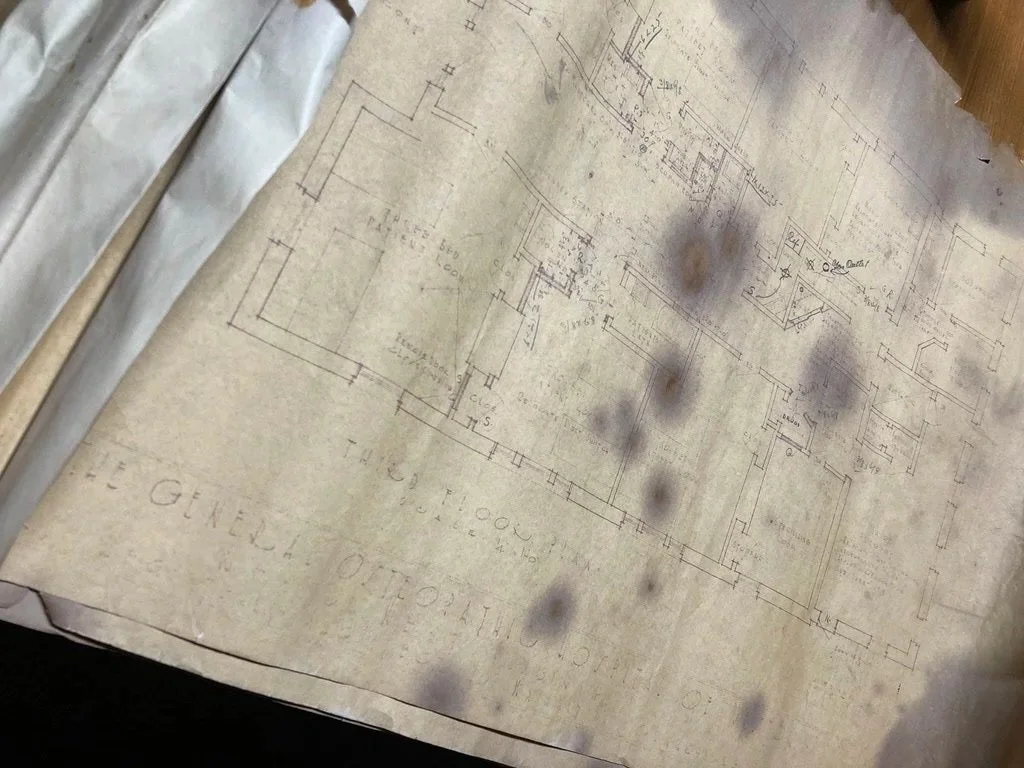
Photograph of the 1938 blueprints for the hospitals addition/renovation by W. H. Grant Jr. - Registered Architect.
gifted to us by generous descendant of a previous owner.
First Major Surgery Scheduled
While we’ve been digging up history, we’ve been focused on the very top of the building. The hospital will be having it’s first surgery in this century very soon: a posterior roof transplant (rear roof replacement). It won’t be the last major surgery by any means…
The Odds & Ends
The most recent inhabitant, a pigeon living in what used to be the major surgery operating room, seems to have accepted our eviction notice with grace. Now to clean up the mess it left…
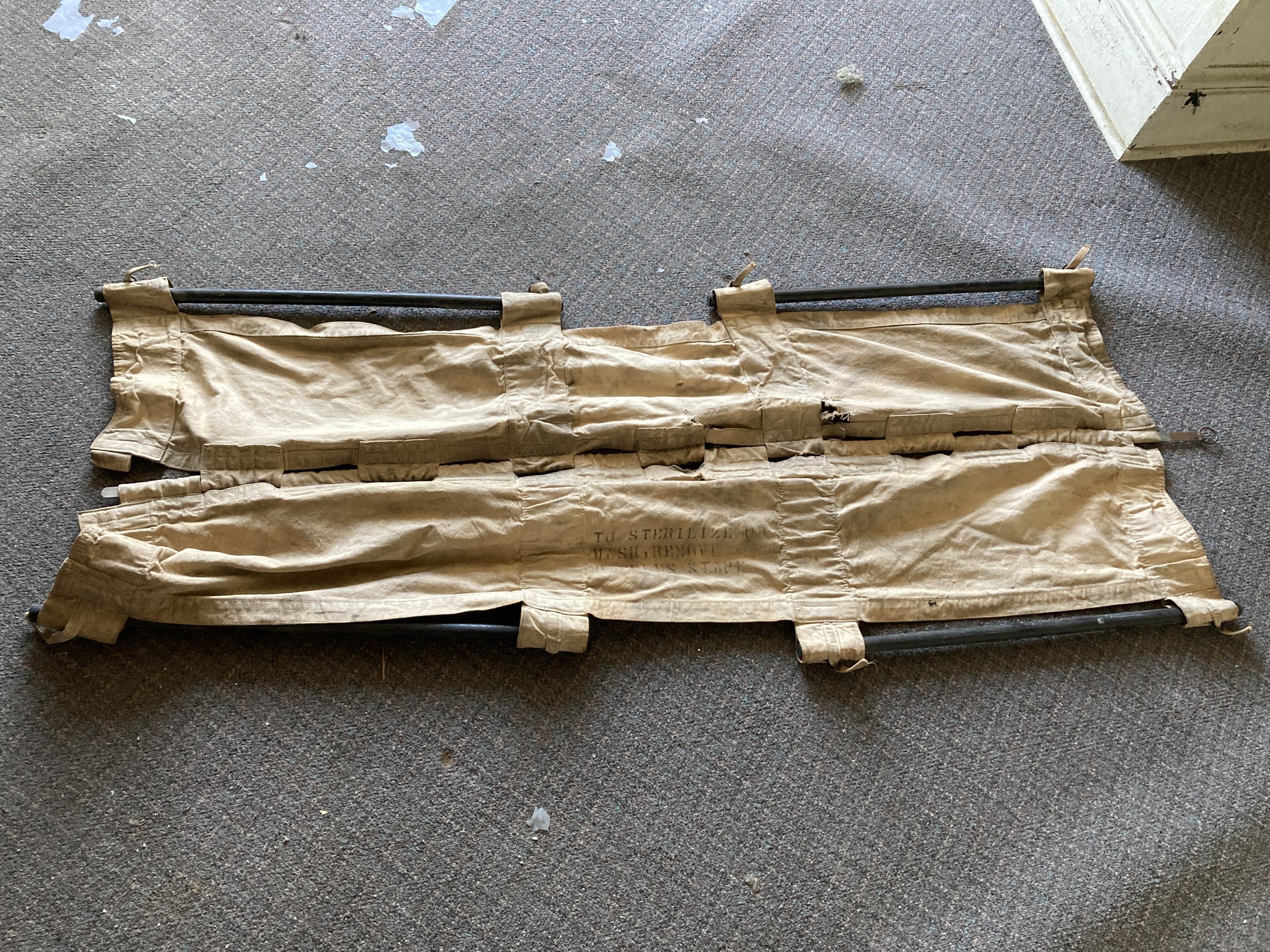
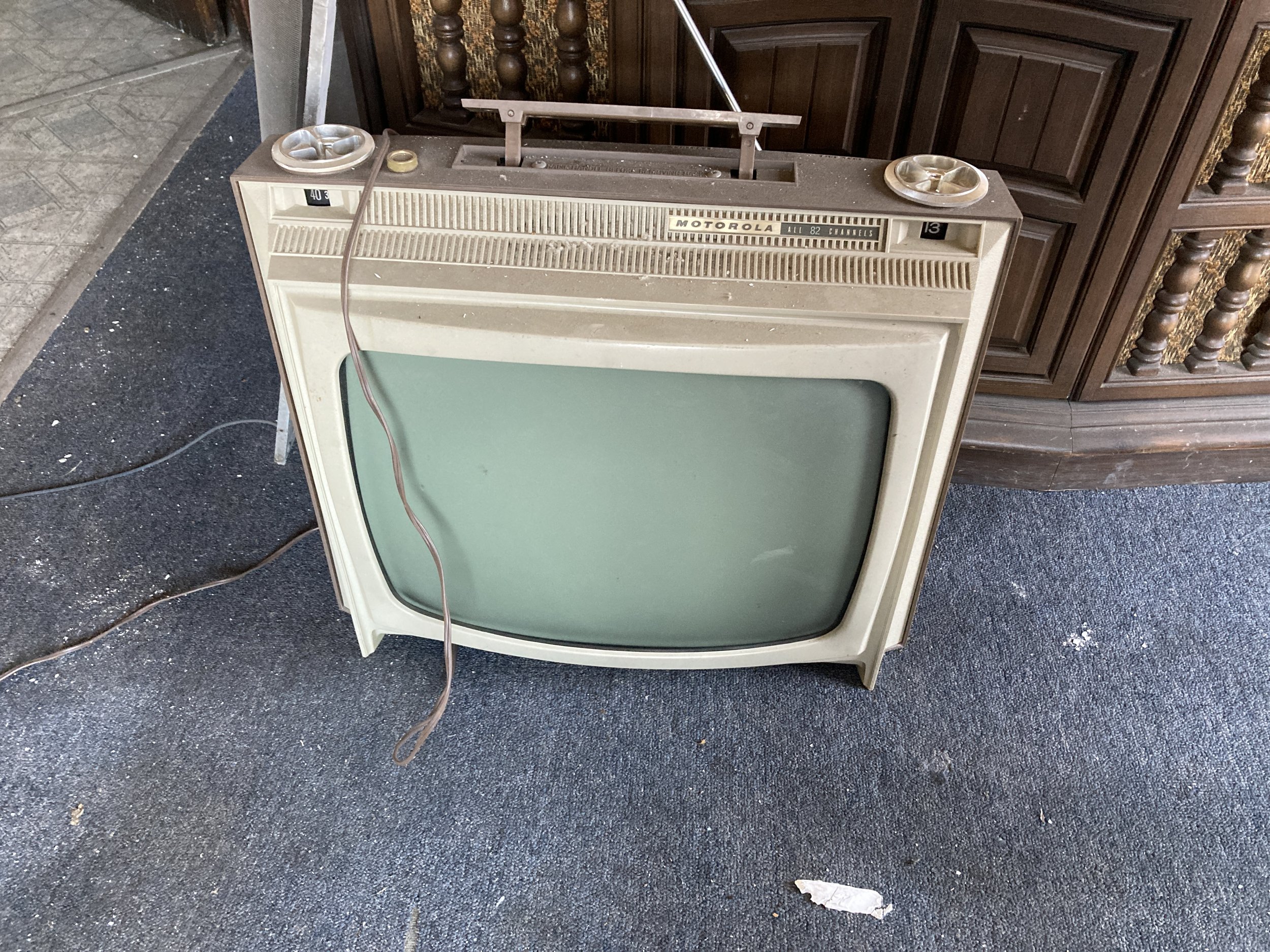
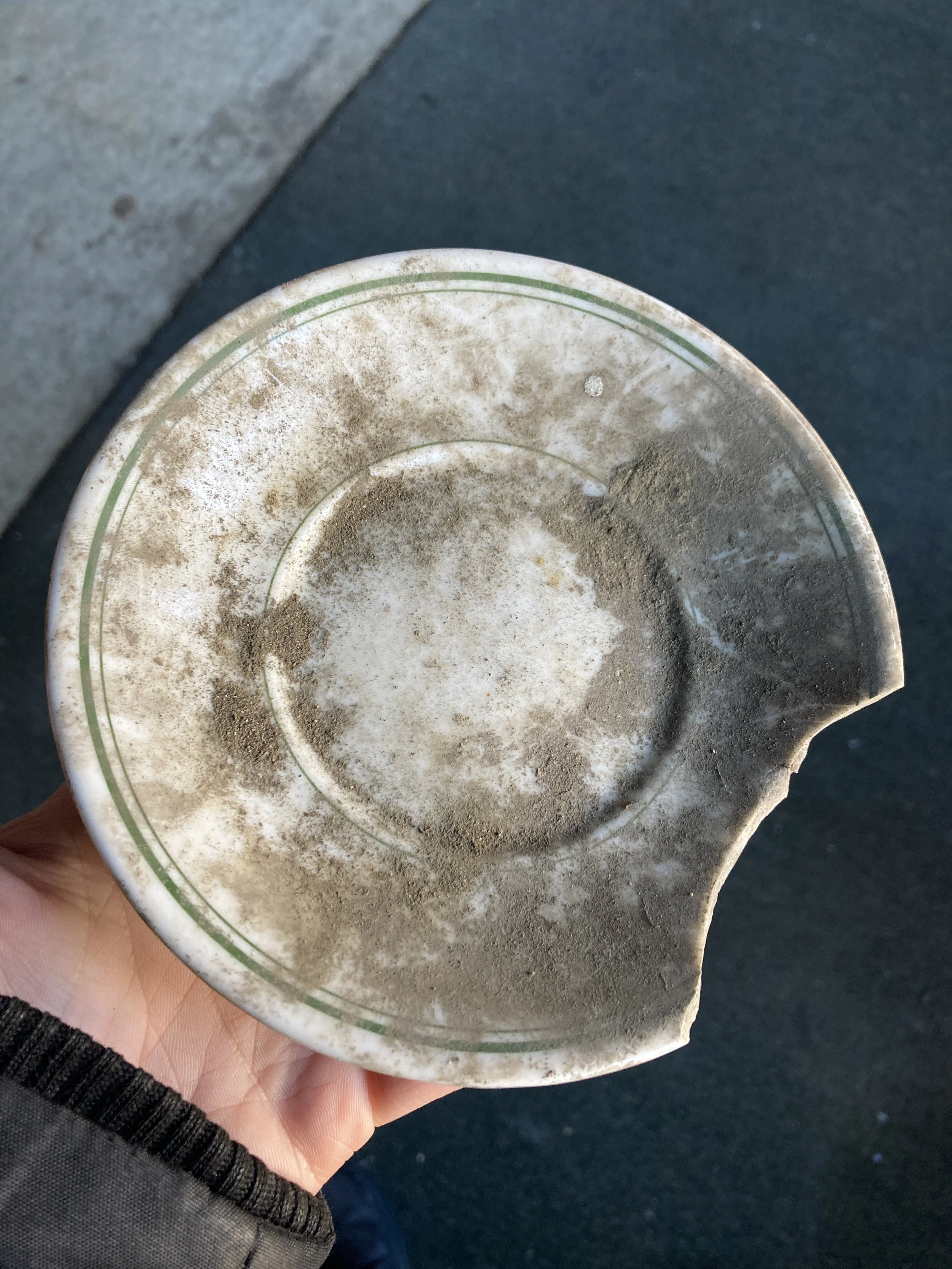
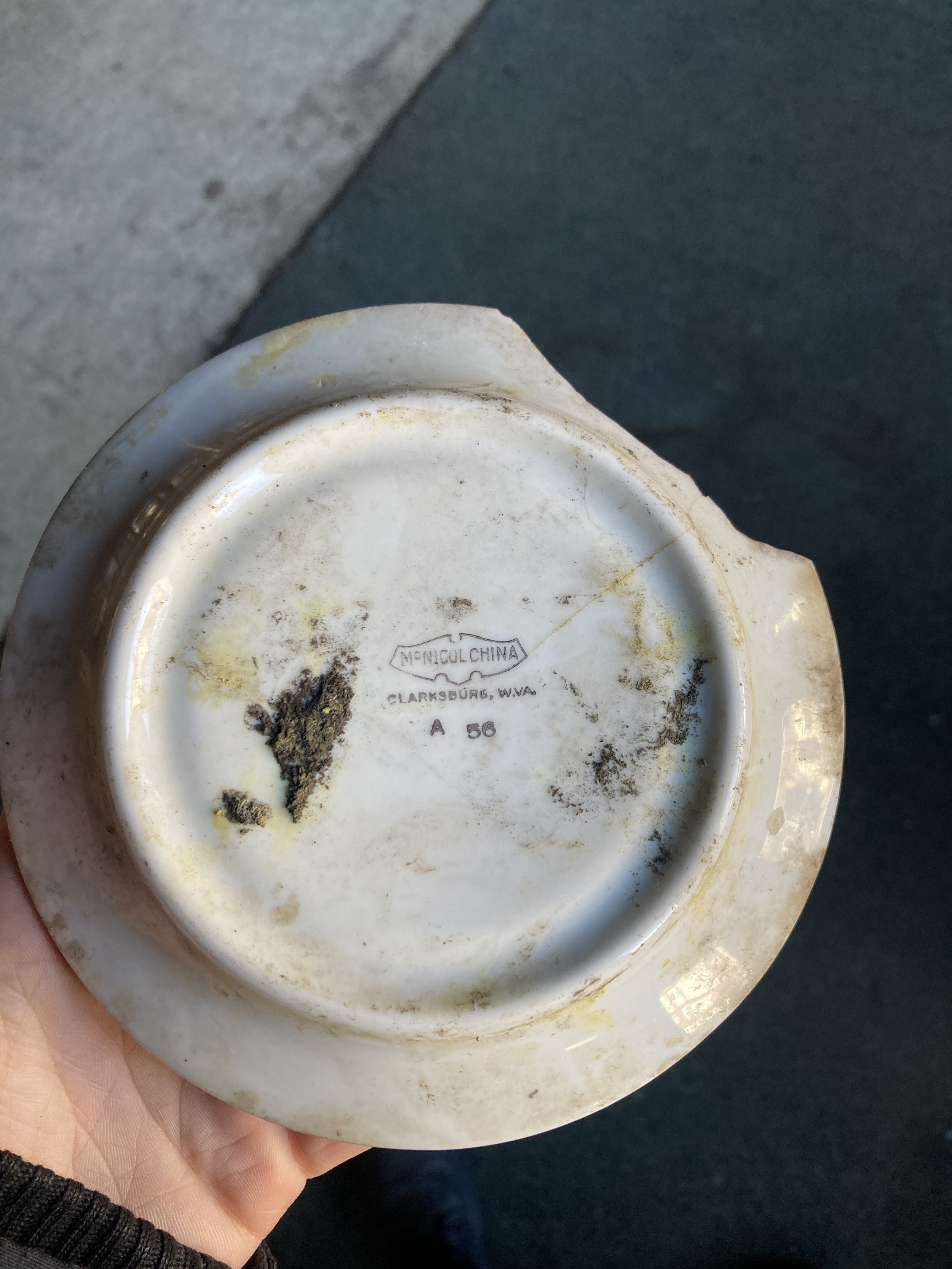
We’ve found a little bit of everything so far: dead bugs, cigarette butts, a vintage Motorola TV that boasts “All 82 Channels,” a military style stretcher, a vintage dining hall plate, lots of old bottles (likely from prohibition), a vintage car side mirror, abandoned toys from it’s life as apartments, and what looks to be the missing pieces of the original main staircase. It’s hard to see past all the furniture, garbage, and debris, but I’m sure we will keep finding little treasures left by previous inhabitants.